Slieve Foye & The Barnavave Loop : Ireland’s Ancient East
Ireland’s Ancient East : If you are a hillwalker and a visitor, then explore a little of Ireland’s Ancient East, away from the tourist crowd. With “lost” villages, megalithic tombs and a landscape that nourished the stone age and fostered our legends.
And if you are local, but early in your hill-walking adventures, then this walk is for you. Made “challenging” only by its length (14 km), its occasional difficulty underfoot, and the need for a little wayfinding.
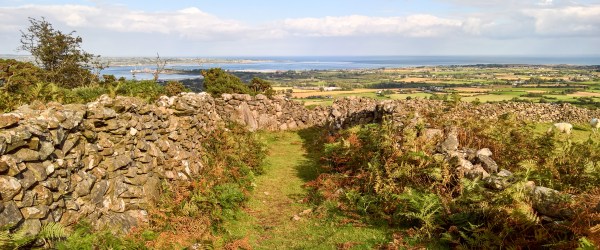
The Barnavave Loop : A waymarked laneway leads you through a famine deserted village
Description
Starting and finishing with well waymarked bohereen, green lanes and forestry track, the anti-clockwise route embraces delightful hill and moorland walking strewn with sights to engage and entertain.
Apart from the distance, the fitness challenges are: The initial climb (on minor roadway), picking your way through the boulders and bog as you rise up and contour around the gabbro summit of Slieve Foy, (just take your time, it’s worth it). And the descent of Slieve Barnavave, (respect your knees). Practice your wayfinding and be prepared for days when the winds blow up from the Irish Sea and over the ridge of Slieve Barnavave. And if it’s too much, there is a shortcut halfway around.
There are route instructions on Discover Ireland and from Carlingford tourist office (details and links below). OSI 1:50,000 Discovery Map no 36.
Sharing is brilliant. It rewards me for my effort and encourages me to do more. Please share...

Vargo Hexagon Wood Stove
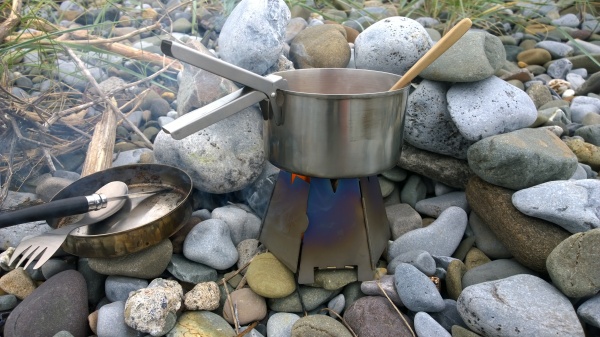
Vargo Hexagon Wood Stove : Makeshift windshield and “door” closed.
Summary view
All year around, for any backpacking trip up to the snowline, this Vargo Hexagon Wood Stove is now my “go-to” cooking aid when I’m packing light. Here’s why:
Ease of Use
It couldn’t be easier. It all relies on you practicing the simple skills to use it as efficiently as possible. I already have a video on how to light a foraged-fuel stove for those who’ve never used one before. Try it and save yourself from reliance on gas, petrol and the like. Most days, you’ll have a hot drink in your hands 15 minutes after taking the stove from your sac. Just get yourself organised. Read more…
Sharing is brilliant. It rewards me for my effort and encourages me to do more. Please share...

Brandon Hill loop walk – Co. Kilkenny
Brandon Hill dominates Craiguenamanagh the former home of Cistercian monks, the ancient routeway of the River Barrow and the border of counties Kilkenny and Carlow. This loop walk forms an easy introduction to the wilder side of walking. And a pleasant diversion for the experienced.
Easy forestry trail and track, bookend a couple of kilometres of trailway up and over the summit of Brandon Hill. Less that 12 kms, 350 metres ascent and 4 hours when starting from point C. Average going underfoot, and marginally challenging only because of the distance and the hill top walking. There are route instructions in this downloadable pdf (courtesy TrailKilkenny). OSI 1:50,000 Discovery Map no 68.

Gazing down to the River Barrow and at lock and navigation.
Sharing is brilliant. It rewards me for my effort and encourages me to do more. Please share...

Easy Lighting : Kelly Kettle
I made this video at the request of some camping friends a couple of years ago… And now it’s been suggested I publish it on the blog…
So, if you like the idea of a solid fuel camping stove, for which you need to forage for fuel, but are a bit apprehensive about the whole idea, this video will show you 10 different ways to light a fire in the fire base of a Kelly Kettle. It uses fuel foraged at the shoreline of the Irish Sea, which I light in a variety of ways using an ordinary kitchen match, a lifeboat match, a Primus gas lighter, and a “Swedish” fire steel. It also shows you how to use a BBQ firelighter and fatwood available from outdoor retailers to make life a little easier.
And if you are in a position to try using last years growth from ling (Calluna vulgaris) or any of the heathers (Erica tetralix, Erica cinerea) you’ll find they have similar, properties burn well, even when wet on the outside, burn with very little soot and leave very little ash.
You can use these simple techniques with any foraged-fuel camp stove…
Sharing is brilliant. It rewards me for my effort and encourages me to do more. Please share...

Using a Compass : Finding North
Why do I need to know which way is North?
Maybe you are following instructions. Maybe you want to know where the sun will rise (East) or where it will set (West). Or maybe you want to use a map to help you make your way. So it helps to know which way is North, because most maps are drawn with North at the top edge. Of course there are always exceptions. For example some French maps of the Pyrénees are drawn looking South. But generally you’ll find North at the top of the map. Still it’s always best to check by looking around the map, to see if you can find a “compass rose” like these…
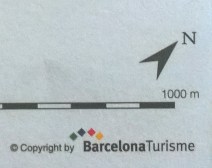
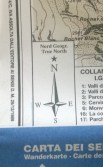 A rose like one of these illustrations, will show you which way the top of the map points. We say it’s the way the map is: “oriented”. Once you know how to orient your map, you will immediately find it easier to know which way to go next… even on a city street. We’ll discuss this more in future posts.


 Best Walks